
Modern architecture is about more than creating visually appealing spaces. An environment must also feel comfortable, support its intended activities, and provide the right conditions for communication, concentration, and relaxation.
One of the most frequently overlooked elements of interior design is acoustics.
Excessive echo, background noise, and reverberation can make even the most beautifully designed room uncomfortable. This is where acoustic panels play an important role.
From corporate offices and restaurants to educational facilities and residential interiors, sound-absorbing panels provide an effective way to improve acoustic comfort while complementing architectural design.
What Are Acoustic Panels?
Acoustic panels are specially engineered products designed to absorb sound energy and reduce unwanted reflections within enclosed spaces.
When sound waves travel through a room, they interact with surfaces such as walls, ceilings, floors, windows, and furniture.
Hard materials, including glass, concrete, stone, and untreated plaster, reflect much of the sound energy back into the environment. These reflections can overlap with the original sound, creating excessive reverberation and reducing speech clarity.
Sound-absorbing panels help manage this phenomenon by absorbing a portion of the sound energy that reaches their surfaces.
The result is a more controlled acoustic environment where conversations become clearer and excessive reverberation is reduced.
Sound Absorption vs. Soundproofing: Understanding the Difference
Although the terms are often used interchangeably, sound absorption and soundproofing address different acoustic problems.
Sound Absorption
Sound absorption focuses on controlling sound reflections inside a room.
Its primary purpose is to reduce reverberation, improve speech intelligibility, and create a more comfortable listening environment.
For example, installing sound-absorbing panels in a meeting room can help reduce reflections from walls and ceilings, making conversations and video conferences easier to understand.
Soundproofing
Soundproofing, or sound insulation, focuses on reducing sound transmission between separate spaces.
It typically involves construction systems, walls, doors, windows, floors, and specialized insulating materials.
For example, preventing traffic noise from entering an office requires a different approach from reducing echo inside that office.
Understanding the acoustic problem is therefore the first and most important step in choosing an effective solution.
How Do Sound-Absorbing Panels Work?
The performance of an acoustic panel depends on its materials, internal structure, thickness, and installation configuration.
Many acoustic panels use porous materials such as specialized polyester fibers. When sound waves enter these materials, interactions within the fiber structure convert a portion of the acoustic energy into heat.
This process reduces the amount of sound energy reflected into the room.
However, not all panels perform equally across different frequencies.
Higher-frequency reflections, often associated with speech clarity, may be relatively easy to control, while lower frequencies generally require careful material selection and acoustic design.
ACUSTICO® develops sound-absorbing solutions with specific material structures and manufacturing technologies to address a broad range of acoustic requirements.
DECHO®: Acoustic Performance Meets Italian Design
One of the established product families developed by ACUSTICO® is DECHO®, a range of sound-absorbing panels manufactured in Italy.
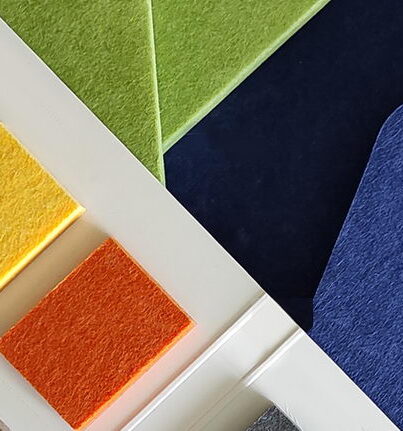
DECHO® panels combine polyester-fiber acoustic technology with a design-oriented appearance suitable for various architectural environments.
Their acoustic performance is based on porous sound absorption, complemented by the behavior of the panel’s specially processed surfaces.
This approach helps manage unwanted sound reflections while allowing acoustic treatment to become part of the interior design rather than an industrial-looking addition.
Depending on the product and configuration, DECHO® panels can be integrated into workplaces, hospitality venues, auditoriums, educational environments, and residential interiors.
Where Are Acoustic Panels Most Effective?
Acoustic panels can be used in many different settings, but each environment requires a different approach.
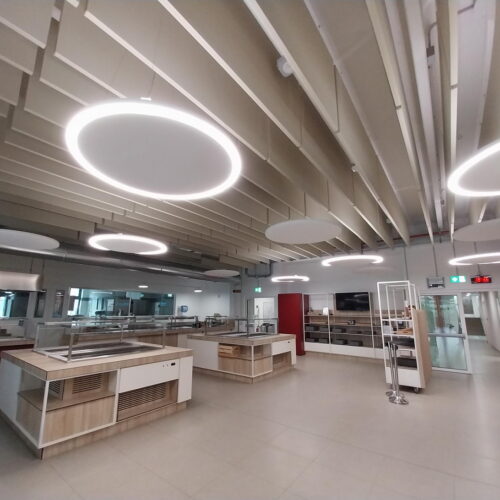
Offices and Meeting Rooms
Acoustic treatment can improve speech clarity, reduce reflected noise, and make shared workspaces more comfortable.
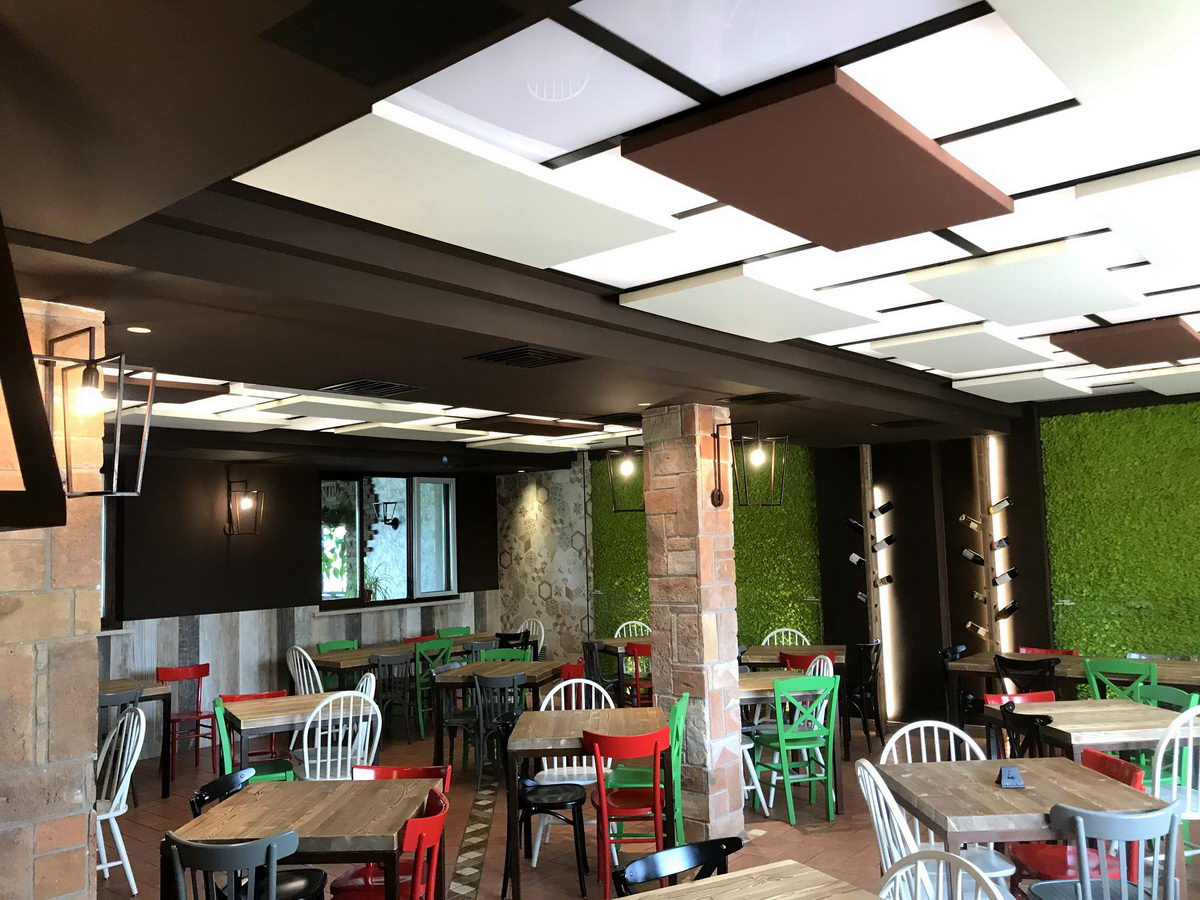
Restaurants and Hospitality Spaces
Sound-absorbing systems help manage excessive reverberation generated by conversations, background music, and activity within dining areas.
Schools and Educational Facilities
Clear speech is essential in learning environments. Appropriate acoustic treatment can improve listening conditions in classrooms, lecture halls, and shared educational spaces.
Auditoriums and Conference Rooms
Careful reverberation control supports speech intelligibility and the listening experience in spaces designed for presentations, conferences, and performances.
Residential Interiors
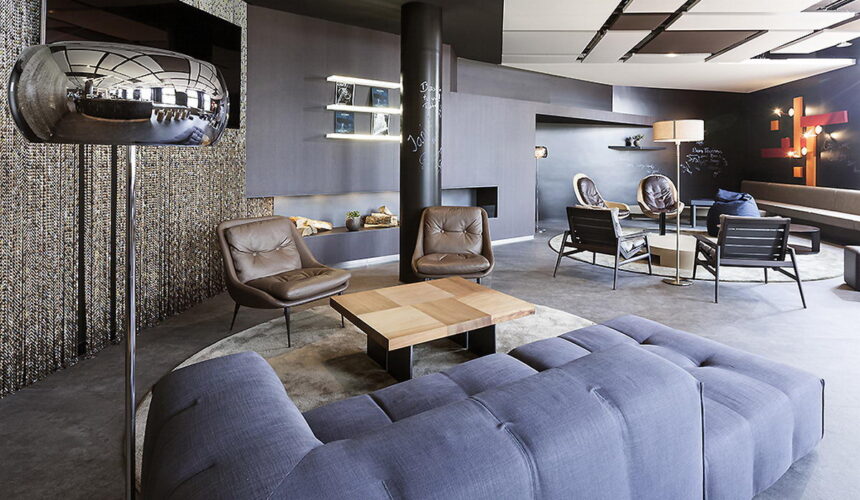
Large open-plan living spaces with hard surfaces can benefit from decorative acoustic panels that reduce unwanted reflections without compromising interior aesthetics.
How Many Acoustic Panels Does a Room Need?
There is no universal quantity of panels suitable for every environment.
The required amount of sound-absorbing material depends on several factors:
- Room dimensions and ceiling height
- Surface materials and existing furnishings
- Intended use of the environment
- Existing reverberation time
- Acoustic absorption characteristics of the selected products
- Desired acoustic performance
A room with extensive glass surfaces and hard flooring may require a different acoustic treatment from a heavily furnished room with carpets and curtains.
For more demanding projects, assessing the reverberation time and acoustic characteristics of the room is an important step toward selecting an appropriate treatment.
Can Acoustic Panels Also Be Decorative?
Absolutely.
Contemporary architectural acoustics no longer requires sacrificing visual appeal for technical performance.
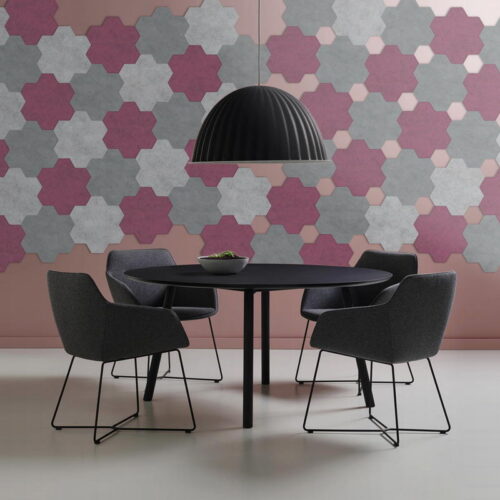
Modern acoustic solutions can be integrated into interiors through different geometric shapes, dimensions, colors, textiles, and installation methods.
ACUSTICO® combines acoustic engineering with Italian design, offering product collections intended to complement the architectural identity of a space.
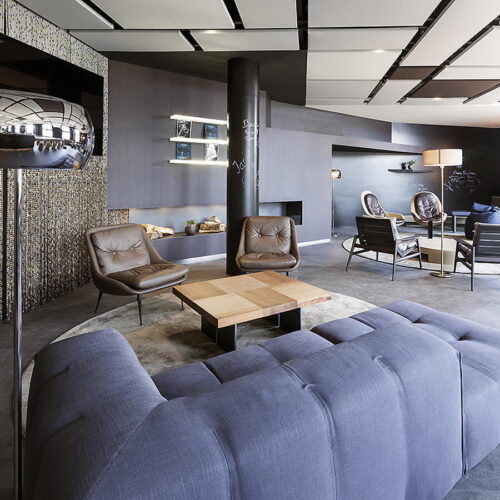
Acoustic panels can become decorative wall compositions, ceiling features, suspended installations, or subtle elements that blend into existing surroundings.
The result is a balance between acoustic performance and visual harmony.
Choosing the Right Acoustic Solution
Selecting an effective acoustic treatment starts with identifying the problem.
Is the space affected by excessive echo? Are conversations difficult to understand? Is a large open-plan environment becoming uncomfortable because of reflected sound?
Once the problem is understood, the next step is selecting the most suitable combination of product type, quantity, positioning, and design.
By considering both the technical requirements and the architectural character of the environment, acoustic treatment can provide lasting improvements in comfort and usability.
Improve Your Space with ACUSTICO®
Good acoustic design creates environments where people can communicate clearly, concentrate more easily, and enjoy a better overall experience.
With its range of Italian-made acoustic products, ACUSTICO® brings together sound absorption technology, innovative materials, and contemporary design.
Whether you are planning a new interior or improving an existing space, exploring the right acoustic solutions can make a meaningful difference.